
Recorded: Tuesday, May 12, 2026
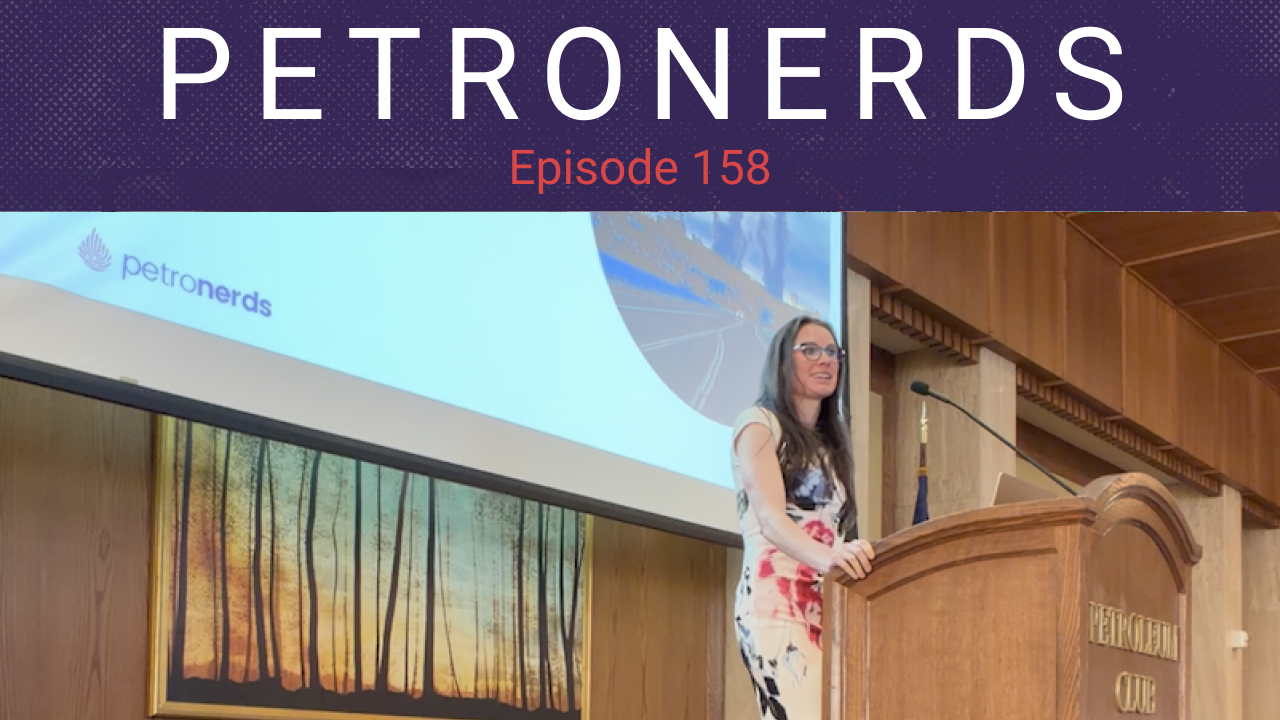
In Episode 158 of the PetroNerds Podcast, Trisha Curtis, host of the PetroNerds Podcast and CEO of PetroNerdstakes, was on stage at the Society of Petroleum Engineers meeting at the Petroleum Club of Midland, Texas, for a wide-ranging discussion on oil markets, geopolitics, energy security, and the future of U.S. shale.
Recorded amid escalating tensions in the Middle East and renewed volatility in global energy markets, Trisha examines how rapidly evolving geopolitical events have exposed the gap between market sentiment and the realities of physical oil. Just months before oil prices surged back toward triple digits, many analysts and industry participants were focused on oversupply concerns, weak demand forecasts, and bearish outlooks for the energy sector.
Drawing on decades of market analysis, Trisha explains why investors, policymakers, and energy executives must remain humble when forecasting commodity markets and why understanding physical energy infrastructure matters more than ever.
Key Takeaways
- Oil markets entered 2026 with geopolitical risk significantly underpriced.
- Iran’s production and exports remain more important to global supply balances than many analysts recognized.
- China’s stockpiling strategy and refining capacity are critical variables in understanding global oil demand.
- The Strait of Hormuz remains vital, but alternative export infrastructure is reducing some chokepoint risk.
- Russia’s energy sector has demonstrated greater resilience than many forecasts anticipated.
- Coal continues to play a foundational role in global energy security.
- Reliable power generation and grid infrastructure will become increasingly important as electricity demand rises.
- U.S. energy dominance remains a major competitive advantage for the American economy.
- The Permian Basin continues to outperform expectations through innovation and productivity gains.
- LNG exports and natural gas infrastructure are becoming increasingly important to global energy security.
Iran, China, and the Geopolitics of Oil
A major focus of the discussion centers on Iran’s role in global oil markets and the strategic relationship between Iranian crude exports and Chinese demand.
Trisha explores how sanctioned barrels from Iran, Russia, and Venezuela contributed to perceptions of oversupply in global markets while simultaneously masking growing geopolitical risk. She argues that many market participants underestimated both the scale of Iranian production and China’s willingness to continue purchasing discounted crude.
The conversation also examines the strategic importance of the Strait of Hormuz, one of the world’s most critical energy chokepoints. While the strait remains essential to global oil flows, Trisha highlights how Saudi Arabia and the United Arab Emirates have invested heavily in alternative export infrastructure, including pipelines to Yanbu and Fujairah, reducing some of the region’s vulnerability during times of conflict.
Why China Is the Most Important Energy Story in the World
One of the central themes of the presentation is China’s long-term energy security strategy.
Trisha argues that understanding China is essential to understanding today’s oil market. Beyond demand growth, China has spent years building strategic crude inventories, expanding refining capacity, increasing domestic production, and investing in power generation infrastructure designed to strengthen national resilience.
She suggests that much of China’s apparent oil demand growth may actually reflect large-scale stockpiling efforts, creating significant uncertainty around traditional demand estimates. Combined with China’s continued reliance on coal, expanding electricity generation, and focus on industrial competitiveness, these policies reveal a country preparing for long-term strategic challenges rather than short-term market fluctuations.
Energy Transition Narratives Meet Reality
The discussion also tackles broader energy policy debates, including the role of coal, natural gas, renewables, and electricity markets.
Trisha challenges many prevailing energy-transition assumptions, arguing that energy security and reliability remain the foundation of economic growth and national security. She points to China’s continued expansion of coal-fired generation alongside renewable development as evidence that reliable baseload power remains indispensable.
The conversation explores how rising electricity demand from artificial intelligence, data centers, manufacturing, and electrification is creating new pressures on power grids throughout the United States and Europe. According to Trisha, years of underinvestment in dispatchable generation, transmission infrastructure, and permitting reform have created vulnerabilities that policymakers can no longer ignore.
The Resilience of U.S. Shale
The episode concludes with an in-depth assessment of the U.S. shale industry and the future of American energy production.
Despite recurring claims that U.S. shale growth has peaked, Trisha highlights continued productivity improvements across the Permian Basin, including longer laterals, stronger completion techniques, and operational efficiencies that continue to surprise forecasters.
She also discusses the growing importance of natural gas infrastructure, LNG exports, and pipeline takeaway capacity as critical components of America’s energy future. While constraints remain, particularly in natural gas transportation, Trisha argues that the U.S. oil and gas sector remains one of the country’s greatest strategic advantages.
Whether you’re an energy executive, investor, policymaker, or industry professional, this episode offers a timely and data-driven examination of the forces shaping oil markets, power systems, and global energy security in an increasingly uncertain world.
Podcast: Play in new window | Download