Recorded April 10, 2026
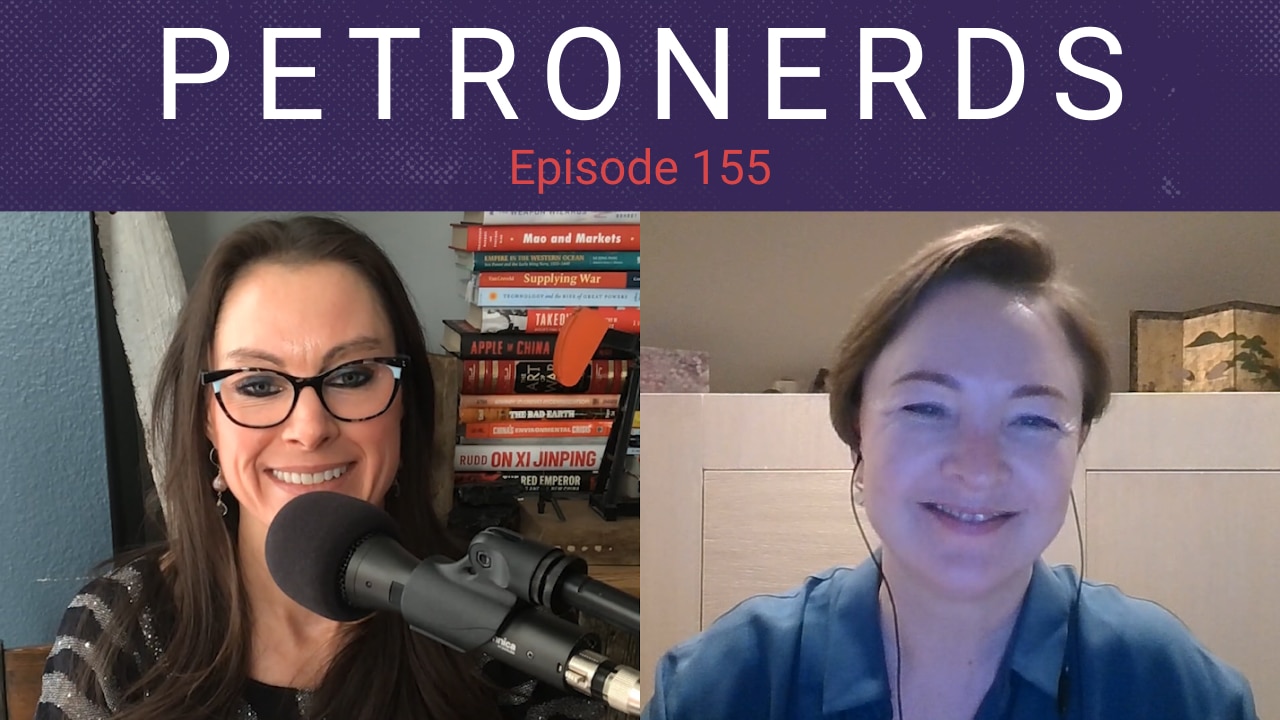
Trisha Curtis, CEO of PetroNerds and host of the PetroNerds podcast, welcomes Tatiana Mitrova back to discuss the geopolitical shocks reshaping global energy markets. Just days into the Iran ceasefire, they unpack why the latest crisis is better understood as a logistical shock than a traditional oil shock, how drone warfare is changing energy infrastructure risk, why Russia’s economy has proven more resilient than many expected, and how China is building an energy strategy centered on security, redundancy, and leverage.
Tatiana brings a systems-level view to the conversation, explaining how large energy systems behave under pressure, how markets adapt under stress, and why the world is underestimating the long-term consequences of today’s conflicts. From the Strait of Hormuz to Russian oil production, from the war in Ukraine to China’s stockpiling and trading strategy, this episode connects the dots between geopolitics, logistics, military technology, and energy market structure.
This episode is a masterclass in thinking beyond simple supply-and-demand narratives. It shows how energy markets are shaped not just by barrels and molecules, but by logistics, chokepoints, insurance, military technology, infrastructure resilience, and state capacity. For anyone trying to understand oil, gas, Russia, China, or the next phase of energy security, this conversation offers a deeper framework for what comes next.
Tatiana Mitrova is a Global Fellow at Columbia University’s Center on Global Energy Policy and one of the leading experts on Russian energy, energy security, and geopolitical risk. Her work focuses on energy economics, infrastructure, chokepoints, and how complex systems behave under stress.
In this episode:
- Why the Iran crisis is “not actually an oil shock,” but a logistical shock
- What the market is missing about the Strait of Hormuz, insurance, and shipping risk
- How shadow fleets, workarounds, and parallel trading systems keep oil moving under stress
- Why drones have fundamentally changed infrastructure security and energy geopolitics
- What sanctions have and have not done to Russia’s economy and oil sector
- Why Russia’s production has remained resilient, even as flexibility declines
- How the war in Ukraine has turned into a costly war of attrition
- Why Europe is already living in a hybrid-war environment
- How China is using this moment to strengthen energy security and strategic optionality
- What energy markets can learn from “systems under stress”
Podcast: Play in new window | Download