Recorded July 26 and July 9, 2026
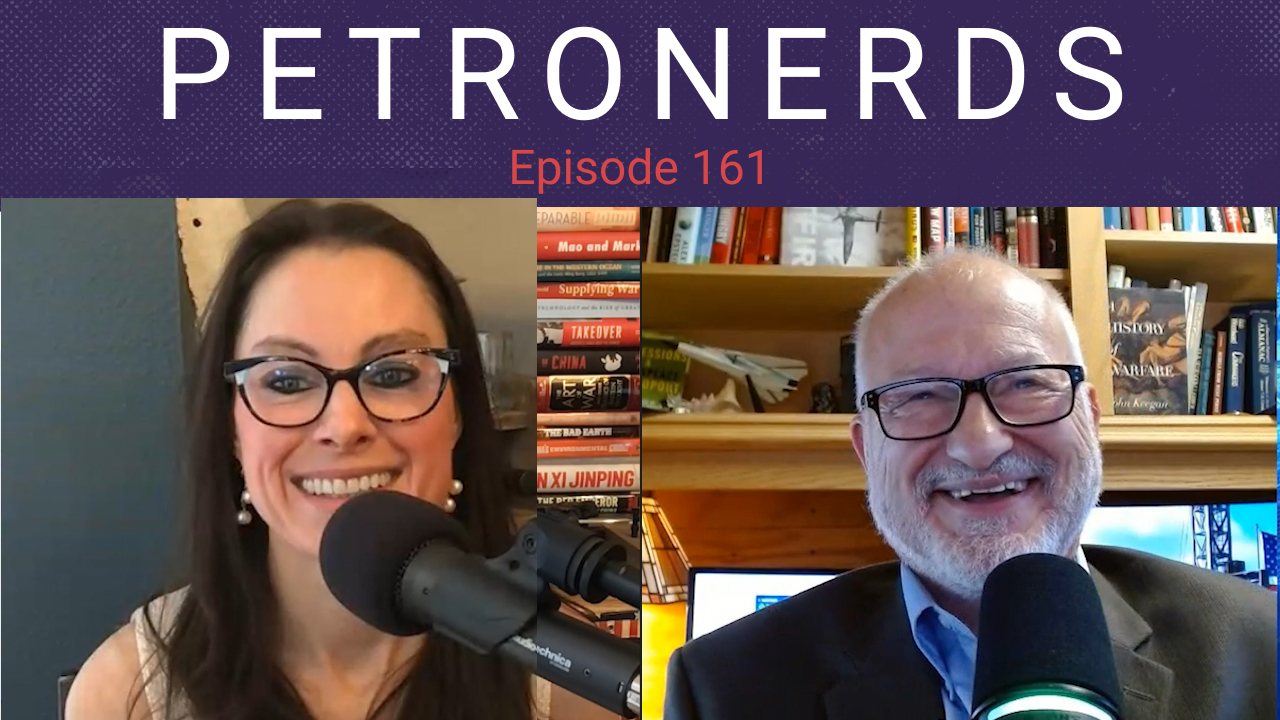
In Episode 161 of the PetroNerds Podcast, Trisha Curtis, CEO of PetroNerds and host of the PetroNerds Podcast, is joined by Stu Turley of Energy News Beat for a wide-ranging discussion on the intersection of energy markets, geopolitics, and national security.
Key Takeaways
- Iran’s threats to the Strait of Hormuz highlight the importance of resilient global energy infrastructure.
- U.S. oil and natural gas production continue to provide America with a significant economic and geopolitical advantage.
- China’s investments in coal, synthetic fuels, and energy stockpiling underscore its long-term focus on energy security.
- Europe’s energy policies continue to challenge industrial competitiveness and grid reliability.
- Reliable, affordable energy remains the foundation of economic growth and national security.
The conversation begins with escalating tensions involving Iran and the strategic importance of the Strait of Hormuz. Trisha and Stu examine attacks on energy infrastructure and shipping, discussing whether Iran’s actions reflect growing leverage or increasing desperation. They also explore how expanding export infrastructure in Saudi Arabia and the United Arab Emirates is reducing dependence on one of the world’s most important maritime chokepoints.
The discussion then shifts to the Strategic Petroleum Reserve and the contrasting energy strategies of the United States and China. While America remains the world’s leading producer of oil and natural gas—with crude production nearing 14 million barrels per day and natural gas output approaching 136 billion cubic feet per day—China continues investing heavily in energy stockpiles, coal-fired generation, and synthetic fuel production to strengthen its long-term energy resilience.
Trisha explains why America’s energy abundance extends far beyond production. Refining capacity, pipeline infrastructure, LNG exports, petrochemicals, and manufacturing all contribute to a competitive advantage that supports economic growth while enhancing U.S. influence around the world.
China’s approach provides a sharp contrast. The episode examines Beijing’s continued expansion of coal generation and coal-to-liquids projects as part of a broader strategy to reduce dependence on imported oil and prepare for future geopolitical disruptions. Rather than viewing these investments individually, Trisha and Stu discuss how they fit into China’s long-term planning for energy security.
The conversation also explores Europe’s evolving energy landscape, including the consequences of reducing domestic coal, nuclear, and oil and gas production while increasing reliance on imported LNG. Trisha and Stu discuss how higher energy costs and declining industrial competitiveness complicate Europe’s efforts to expand defense spending and strengthen economic resilience.
The episode concludes with a discussion on electricity markets, grid reliability, ESG and net-zero policies, American manufacturing, NATO, emerging trade relationships, and the growing strategic importance of LNG in global energy markets.
The overarching theme is one that has become increasingly clear: energy security is national security. Countries that prioritize reliable, affordable, and scalable energy systems will be better positioned to support economic growth, strengthen national defense, and maintain geopolitical influence in an increasingly competitive world.
Listen to the full conversation and subscribe to the PetroNerds Podcast for additional market analysis, geopolitical insights, and expert commentary on the forces shaping global energy.
Podcast: Play in new window | Download