Recorded: June 21, 2026
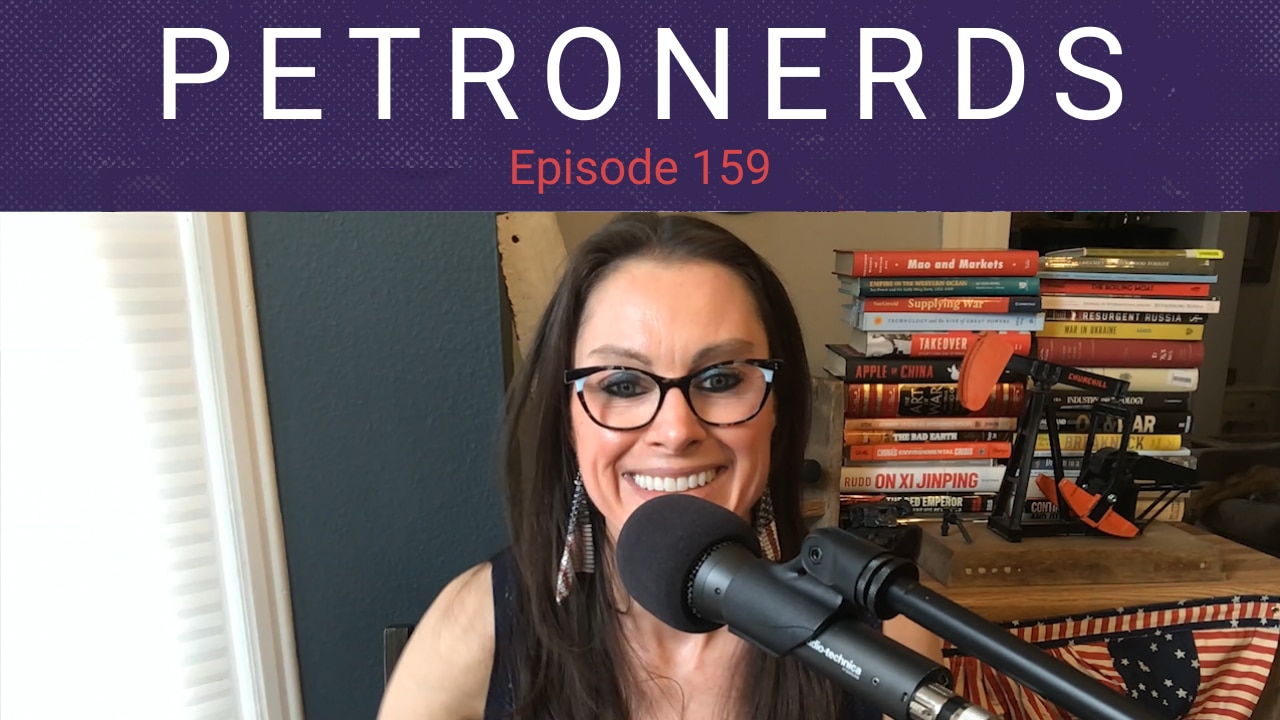
In Episode 159 of the PetroNerds Podcast, Trisha Curtis, CEO of PetroNerds and host of the PetroNerds Podcast, delivers a wide-ranging market update on oil, natural gas, geopolitics, China, strategic petroleum reserves, inflation, and monetary policy.
Recorded on Father’s Day and ahead of America’s 250th Fourth of July celebration, the episode focuses on the U.S.-Iran memorandum of understanding, the Strait of Hormuz, global crude oil flows, China’s oil imports, and the Federal Reserve’s renewed emphasis on inflation. Trisha examines why oil prices moved lower despite heightened geopolitical tensions, how more crude continued reaching the market through Hormuz and alternative export routes, and why physical oil flows matter more than headlines.
Key Takeaways
- Oil prices softened as crude continued flowing through and around the Strait of Hormuz.
- Saudi Arabia and the UAE’s export infrastructure helped reduce supply risks during the latest Middle East tensions.
- China’s crude import decline does not necessarily indicate collapsing demand and must be viewed alongside stockpiling, refinery activity, and energy-security priorities.
- The debate between the IEA and OPEC reflects competing views of future oil demand and supply balances.
- Federal Reserve Chairman Kevin Warsh signaled a stronger focus on inflation and price stability.
- AI-driven investment and rising electricity demand may contribute to future inflationary pressures.
Oil Flows, Hormuz, and Energy Security
A major theme throughout the episode is the disconnect between market sentiment and physical oil realities. Trisha walks listeners through the U.S.-Iran memorandum of understanding, disputed claims surrounding the Strait of Hormuz, and the market reaction to evolving events in the Middle East.
The conversation examines how Saudi Arabia’s East-West Pipeline and the UAE’s Fujairah pipeline provide critical export capacity outside the Strait of Hormuz, helping maintain crude flows during periods of disruption. Trisha also reviews Strategic Petroleum Reserve releases, U.S. crude exports, tanker traffic, and the importance of understanding actual barrel movements in a 100-million-barrel-per-day global oil market.
Why China Remains the Most Important Energy Story
One of the central themes of the episode is China and its long-term energy-security strategy.
Trisha challenges the narrative that declining Chinese crude imports are solely the result of electric vehicle adoption. Instead, she examines China’s stockpiling activity, refinery runs, strategic reserves, domestic production, and energy-security priorities. The discussion highlights why understanding China remains critical to understanding global oil markets, particularly as Beijing balances economic challenges with long-term strategic planning.
The IEA, OPEC, and the Future of Oil Demand
The episode also explores the growing divide between the International Energy Agency and OPEC.
Trisha reviews the IEA’s June Oil Market Report and the possibility that restored production and normalized Hormuz flows could create a future supply overhang. She contrasts that outlook with OPEC’s World Oil Outlook 2026, which projects continued growth in global oil demand through 2050.
The discussion raises important questions about energy security, investment, and whether current market forecasts are adequately accounting for future demand growth.
Inflation, the Federal Reserve, and AI
In the second half of the podcast, Trisha shifts to macroeconomics and monetary policy.
She breaks down the June Federal Open Market Committee meeting, Chairman Kevin Warsh’s first press conference, inflation data, Treasury yields, housing, and the Federal Reserve’s balance sheet. Trisha also discusses the potential inflationary effects of rising investment in artificial intelligence infrastructure, semiconductors, data centers, and electricity demand.
The episode concludes with a broader discussion on inflation, energy prices, housing, and the economic forces likely to shape markets through the remainder of 2026.
Whether you’re an energy executive, investor, policymaker, or industry professional, Episode 159 provides a timely and data-driven examination of the forces shaping oil markets, inflation, energy security, and the global economy.
Podcast: Play in new window | Download