
Recorded: Friday, May 22, 2026, and Tuesday, March 17, 2026
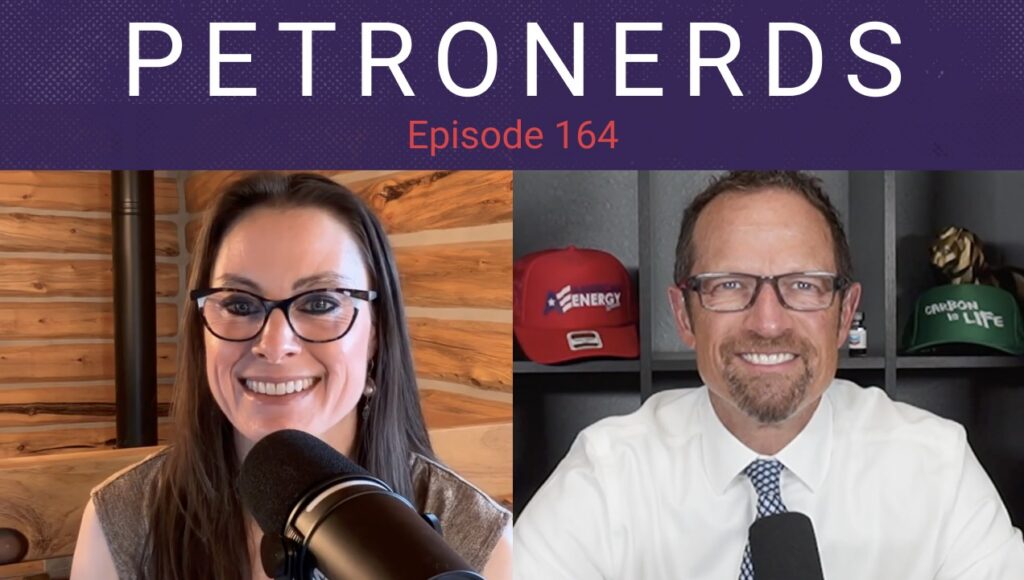
In Episode 157 of the PetroNerds Podcast, Trisha Curtis, host of the PetroNerds podcast and CEO of PetroNerds, sits down with Leen Weijers, former Senior VP of Engineering at Liberty Energy and one of the most respected minds in hydraulic fracturing, for an in-depth technical discussion on hydraulic fracturing, U.S. shale resilience, natural gas, and the future of energy production.
Recorded during a period of elevated geopolitical tensions and rising oil prices, the conversation examines the operational and technological forces that continue to drive American energy production forward. With oil prices near $96 per barrel and Brent crude surpassing $100, Trisha and Leen step back from short-term market headlines to focus on the engineering innovations reshaping the shale patch.
From frac fleets and longer laterals to proppant logistics, simulfracs, natural gas-powered equipment, distributed power generation, and geothermal lessons for shale recovery, the episode explores why U.S. shale continues to outperform expectations.
Why U.S. Shale Continues to Surprise the Market
One of the central themes of the episode is the continued resilience of U.S. shale production. While many analysts have repeatedly predicted shale production slowdowns or peaks, Leen explains that the flexibility of the U.S. frac industry allows operators to respond rapidly to changing price signals and market conditions.
Importantly, both Trisha and Leen emphasize that traditional indicators like rig counts and frac fleet totals no longer tell the full story. Today’s frac crews are significantly larger, more efficient, and more productive than they were just a decade ago.
Operational improvements such as:
- Longer laterals
- Higher-intensity completions
- Improved perforation cluster efficiency
- Better well spacing strategies
- Simulfrac operations
- Enhanced proppant logistics
- Faster pumping rates
- Better frac distribution
have allowed operators to continue increasing production despite fewer rigs and fewer frac fleets.
Efficiency Gains Are Outpacing Reservoir Challenges
The conversation also addresses some of the real challenges facing unconventional oil and gas development, including:
- Parent-child well relationships
- Lower reservoir pressure
- Infill drilling complications
- Potential declines in productivity per foot in certain regions
Despite these challenges, Leen explains that engineering innovation and operational execution continue to offset many of the headwinds facing the industry.
The discussion highlights how the shale industry has effectively turned efficiency gains into a competitive advantage, enabling the U.S. to approach nearly 14 million barrels per day of crude oil production.
Natural Gas Is Reshaping the Future of Frac Operations
A major portion of the episode focuses on the growing role of natural gas in frac operations and power generation.
Leen discusses Liberty Energy’s DigiFrac and DigiPrime technologies and explains how the industry is steadily moving away from diesel-powered systems toward natural gas-powered frac fleets. The conversation also explores how oilfield power technology is increasingly being adapted for mobile and distributed power applications, including support for rapidly growing AI and data center energy demand.
Trisha and Leen also discuss:
- LNG export growth
- Reliability challenges with wind and solar
- Distributed power generation
- Propane and NGLs in global development
- Energy poverty and energy abundance
- Nuclear power
- Geothermal innovation and its lessons for shale recovery
Looking Ahead
The episode closes with a broader discussion about the future of energy development and the importance of maintaining reliable, scalable, and affordable energy systems.
As the energy landscape evolves, Trisha and Leen argue that innovation within the shale patch continues to position the United States as one of the world’s most resilient and adaptable energy producers.
For listeners interested in the technical side of oil and gas, hydraulic fracturing, energy infrastructure, and the future of global energy markets, Episode 157 offers an exceptionally detailed and insightful conversation.
Podcast: Play in new window | Download